
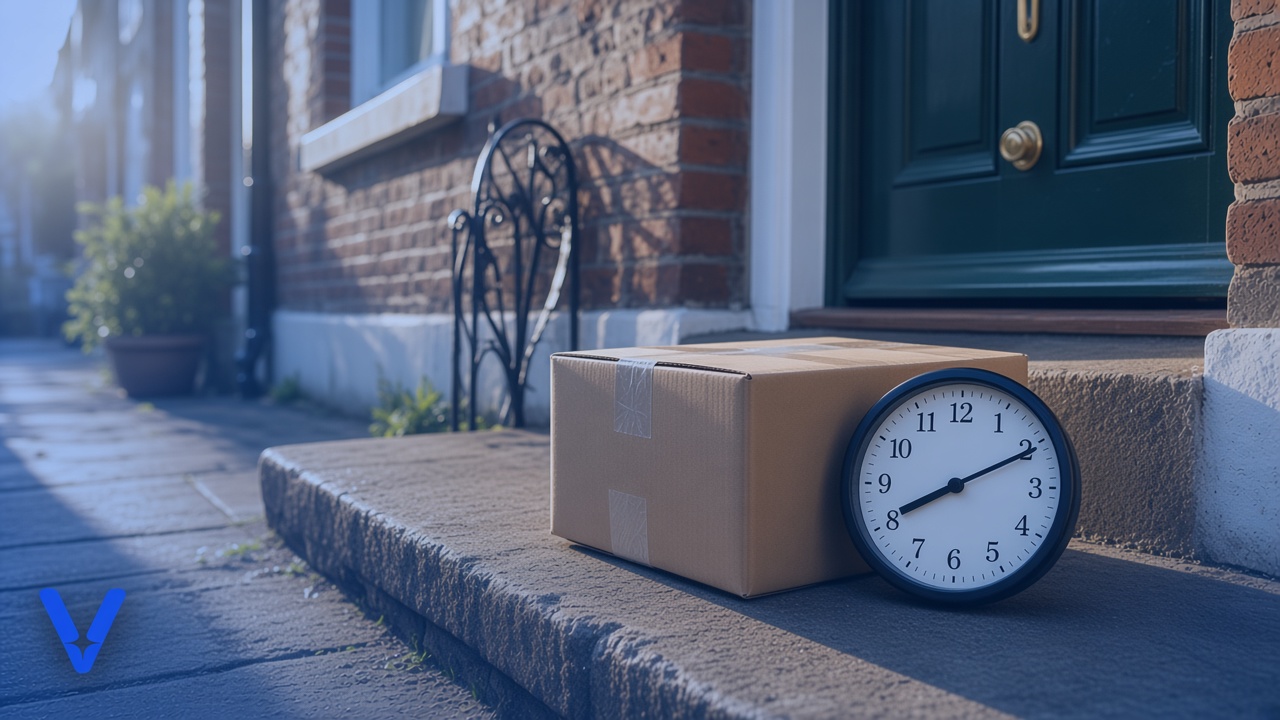
A time window is the constraint most likely to quietly break a route if the underlying data is off, and it's also the one businesses have the most control over improving. This is less about the theory of constraint optimisation - covered in more depth elsewhere - and more about the practical side: what actually goes wrong with time windows in real operations, and how to set them so they help rather than hurt.
What a time window actually constrains
A time window sets the earliest and latest a stop can be arrived at - it doesn't remove the service time needed once the driver's there. A ten-minute-wide window with a fifteen-minute service time is a contradiction the optimiser has to work around, often by pushing the stop's neighbors later than they'd otherwise need to be.
Common mistake: windows that don't reflect reality
Customers often give narrow windows out of habit rather than genuine need - "anytime before noon" becomes "between 10 and 10:15" because that's what a form asked for. Artificially tight windows shrink the set of feasible routes for no real benefit, and the cost shows up as a longer, less efficient overall route for every stop, not just the one with the unnecessarily narrow window.
Common mistake: ignoring service time
A time window paired with an unrealistic (usually zero or default) service-time estimate looks fine when the route is built and falls apart in execution, because every stop after it inherits the delay. This is the same failure mode as underestimating service time in field service dispatch - it just tends to be more visible in delivery routing because the knock-on effect compounds visibly across the rest of the day.
How tight windows trade off against total efficiency
More time windows - and narrower ones - give the optimiser less freedom to find a short overall route, and that's a real, expected trade-off rather than a flaw. A route with heavy time-window constraints will usually be longer in total distance than the same stops with no windows at all. That's the constraint doing its job, not the optimiser failing.
Setting windows that actually help
A few practical habits make the biggest difference:
- Ask for realistic ranges, not a customer's first instinct - most people will accept a wider window than they initially offer if asked
- Pad service-time estimates honestly, especially for stop types that vary (installs, multi-item drop-offs)
- If your tool distinguishes hard windows (must be met) from soft ones (preferred), use that distinction rather than marking everything hard by default
Windows in practice
Two kinds of round are especially window-heavy: foodservice, where kitchens want deliveries before service, and bakery and fresh produce, where almost every customer wants their drop before they open. See route planning for foodservice wholesalers and delivery round planning for bakeries and fresh produce.
About the author
Founder of Anteam, the East Midlands industrial AI company behind vRouted. She led development of Anteam's ant-colony-inspired route-matching platform, backed by the Department for Transport, Innovate UK and the University of Cambridge Institute for Sustainability Leadership.
Planning multi-drop rounds for a UK fleet? Read the guide to route planning software for multi-drop distributors.
Related articles

Manually entering stops one at a time doesn't scale past a handful of deliveries. Here's how CSV import works, and how to structure your data so it geocodes cleanly the first time.
Read more
Route optimisation tells drivers where to go. Scheduling tells you who's available to go there. Here's why multi-drop fleets need both, and how they fit together.
Read more
For businesses running route optimisation out of their own order system, the API is often a better fit than the dashboard. Here's how the integration actually works.
Read moreReady to plan your rounds with vRouted?
Book a 20-minute call and see how vRouted plans your rounds against capacity, delivery windows and driver hours.