
Sustainability in Logistics: Green Route Optimisation Strategies
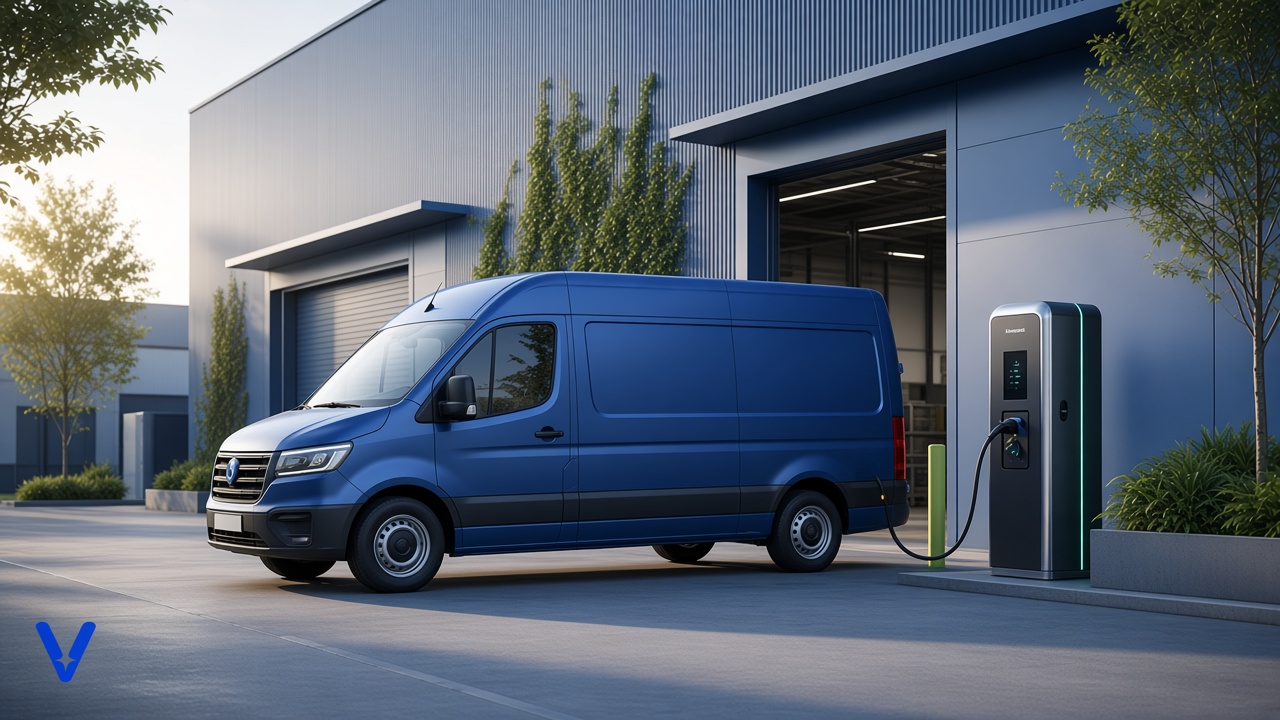
Transportation is one of the largest sources of carbon emissions tied to logistics operations, and for a delivery or service fleet, most of that footprint comes down to one simple variable: miles driven. That makes route optimisation one of the more direct levers a company has for reducing its environmental impact - every mile removed from a route is fuel not burned, independent of what else the business does around sustainability.
The direct link between fewer miles and lower emissions
Fuel consumption and emissions scale roughly with distance driven (with some variation for vehicle type, load, terrain, and traffic conditions), so any reduction in total route distance produces a proportional reduction in fuel burned and CO2 emitted. This is why route optimisation shows up on sustainability roadmaps alongside things like electric vehicle transitions and packaging changes: unlike a fleet electrification programme, which requires new capital equipment, distance reduction through better routing is available immediately with the vehicles a company already owns.
Where the inefficiency actually comes from
Manually planned routes tend to accumulate waste in a few predictable ways: backtracking over already-covered ground, poor load balancing that sends one vehicle on a long loop while another sits underused, and routes built around habit rather than the day's actual stop list. None of these are visible problems when you're looking at a single route - they only become obvious in the aggregate, which is exactly what an optimiser is built to catch.
Beyond distance: consolidation and load efficiency
Reducing miles is the most direct lever, but route optimisation also supports sustainability goals indirectly through better load consolidation - fitting more deliveries onto fewer vehicle trips rather than running additional partially-loaded vehicles. Fewer vehicles on the road for the same volume of deliveries is a second-order emissions reduction on top of the direct routing improvement, and it also reduces wear-and-tear costs and congestion contribution.
Setting a realistic sustainability goal around routing
Avoid committing to a specific emissions-reduction percentage before you've measured your own baseline - the achievable improvement depends heavily on how much slack exists in your current routes, same as with cost savings. A more useful practice is to track total fleet mileage before and after adopting route optimisation, and treat the reduction you actually observe as your sustainability metric, reported honestly rather than borrowed from an industry-wide average that may not reflect your operation.
Where this fits alongside other green logistics initiatives
Route optimisation isn't a replacement for electrification, better packaging, or consolidated warehousing - it's a complementary lever that works with the fleet you already have, starting today, without capital investment. For companies building a sustainability roadmap, it's often the fastest initiative to implement and the easiest one to measure, which makes it a reasonable first step even while longer-term initiatives like EV transition are still being planned.
About the author
Founder of Anteam, the East Midlands industrial AI company behind vRouted. She led development of Anteam's ant-colony-inspired route-matching platform, backed by the Department for Transport, Innovate UK and the University of Cambridge Institute for Sustainability Leadership.
Planning multi-drop rounds for a UK fleet? Read the guide to route planning software for multi-drop distributors.
Related articles
Which drivers' hours rules apply to your multi-drop rounds depends on the vehicle, and from July 2026 on where it goes. A plain-English guide to GB domestic and assimilated (EU) rules, with the limits that shape a round.
Read more
Courier and last-mile delivery routing has to handle same-day insertions, tight time windows, and proof of delivery - here's what actually matters for this segment.
Read more
What route optimisation actually does, where the savings come from for a multi-drop fleet, what gains are realistic, and what to check before trusting any tool's numbers.
Read more
Master advanced route planning techniques that consider vehicle capacity, time windows, and priority deliveries for maximum efficiency.
Read more
Master the art of planning efficient multi-stop routes with time windows, capacity constraints, and customer preferences.
Read moreReady to plan your rounds with vRouted?
Book a 20-minute call and see how vRouted plans your rounds against capacity, delivery windows and driver hours.